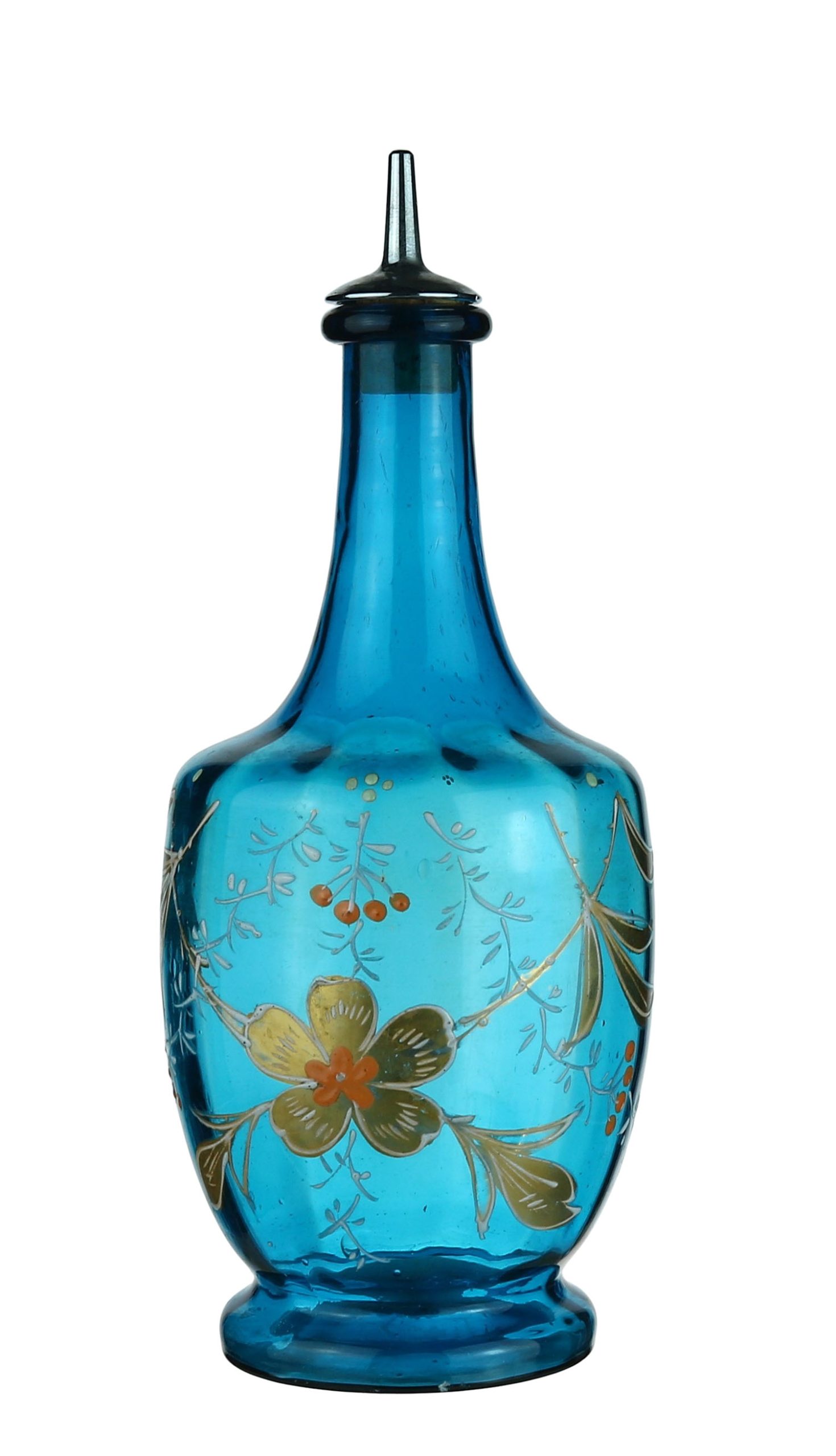
Barber Bottles
The barbershop is an American invention and experience that played an essential role in our nation’s culture and history. Barbers were revered in the Middle Ages, where they also served as surgeons, dentists, and religious officials. The roots of the American barbershop trace back to the colonial era, where, during the 17th century, barbers did more than just cut hair; they also performed medical procedures, such as tooth extractions and bloodletting. These early barbers were often referred to as “barber surgeons.”
The word “barbershop” is defined by The Merriam-Webster Dictionary as “the place of work of someone whose business is cutting and dressing hair, shaving and trimming beards, and performing related services.” The concept of a barber dates back to 3500 B.C., and the term is derived from the Latin word “Barba,” meaning “beard.”
The early barber profession was grouped into one occupation, represented in the iconic barber pole. This retail sign pole, which rotated red, white, and blue, was located outside of traditional barbershops. The red represented blood, the blue—veins, and the white—bandages, which was related more to the barbers who were surgeons. The barber pole has remained a symbol of the profession and establishment and is still used today.
Barbers specialized in men’s haircuts and shaving and the barbershop was a sanctuary where women were absent. During the 19th and 20th centuries, society was biased towards men, and there were many locations where women could not go; the barbershop was on that list. The occupation of a barber began to gain more recognition in the last decade of the 19th century when multiple barber colleges were opened specifically to train barbers on furthering their talents. Shortly after, barbershops became a social hub for men. The history of barbers and the barbershop provides insight into why it was a part of America’s male dominance and representative of the American work ethic.
Let’s go into the gallery. Click on a bottle below!